Physical Address
840 Oakwood Rd, Charleston, WV 25314
Physical Address
840 Oakwood Rd, Charleston, WV 25314

Have you ever watched your cat walk across the room with their tail standing tall and wondered what it means? Or maybe your cat’s tail suddenly puffed up like a bottle brush, and you had no idea whether they were scared, angry, or just surprised.
Cats may not speak our language, but they are always communicating. Their ears, eyes, whiskers, posture, voice, and especially their tail can tell us a lot about how they feel.
Your cat’s tail is like a mood signal. It can show happiness, curiosity, fear, irritation, confidence, affection, and even stress. But many cat owners misunderstand tail movements because cats do not communicate the same way dogs do.
For example, a wagging dog tail often means excitement or happiness. But a fast-moving cat tail can mean the opposite. It may be your cat’s way of saying, “I’m annoyed,” “I need space,” or “Something is bothering me.”
In this post, we’ll explore what your cat’s tail is trying to tell you so you can better understand your furry friend and build a stronger bond.

When your cat walks toward you with their tail standing straight up, it is usually a good sign.
A tall upright tail often means your cat feels confident, friendly, and comfortable. Many cats greet their owners this way when they are happy to see them. You may notice this when you come home, when it is feeding time, or when your cat walks toward you for attention.
Sometimes, the tip of the tail may curve slightly like a question mark. This can mean your cat is curious, playful, or in a friendly mood. It is often a sweet sign that your cat is open to interaction.
If your cat approaches you with a relaxed body, soft eyes, and an upright tail, they may be saying, “Hello, I’m happy to see you.”
This is a good time to gently talk to your cat, offer your hand for them to sniff, or give them attention if they want it.
However, always look at the whole body, not just the tail. If the tail is up but the body is stiff, the ears are back, or the cat seems tense, the meaning may be different. Cat body language works best when you read all the signals together.
Still, in most everyday situations, a relaxed upright tail is one of the clearest signs of a happy and confident cat.
A puffed-up tail is one of the easiest cat signals to notice.
When your cat’s tail suddenly becomes big and fluffy, it usually means they are scared, startled, or feeling threatened. Cats puff their tails to make themselves look larger. This is an instinctive defense behavior.
You may see this when your cat hears a loud noise, sees another animal outside the window, meets an unfamiliar pet, or gets surprised by sudden movement.
A puffed-up tail often comes with other signs, such as an arched back, wide eyes, sideways body posture, flattened ears, or quick movement away from the situation.
When this happens, do not force your cat to come closer or try to pick them up immediately. Your cat may be frightened, and forcing contact can make them more stressed.
Instead, give your cat space. Let them calm down in their own time. Speak softly and remove the scary trigger if possible.
If your cat hides after being frightened, that is normal. Hiding can help them feel safe. Once they feel calm again, they may come out on their own.
A puffed-up tail is your cat’s way of saying, “I feel unsafe right now.”
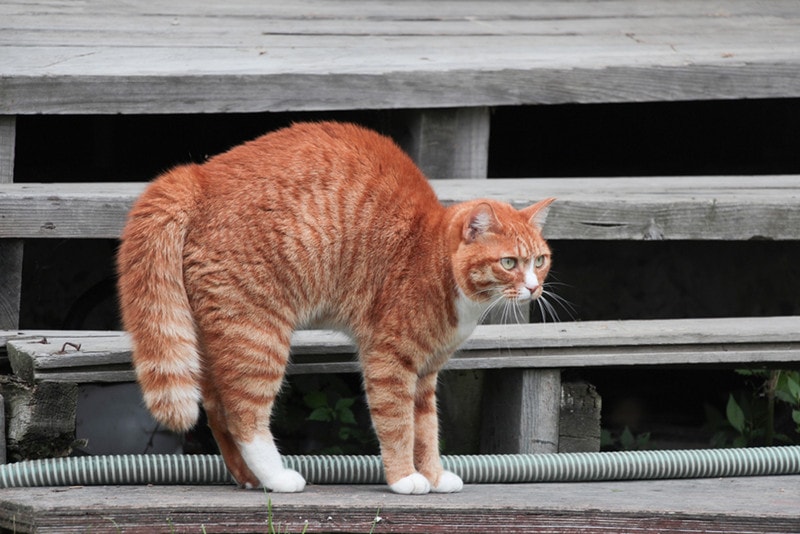
If your cat’s tail moves slowly from side to side, they may be focused on something.
You might notice this when your cat watches a bird through the window, stares at a toy, or prepares to pounce. The slow tail movement shows that your cat is alert and thinking.
This is common during play or hunting behavior. Your cat may lower their body, keep their eyes fixed, and slowly move the tail before suddenly jumping.
In this situation, the tail is not usually a warning sign. It often means your cat is interested, focused, and ready for action.
However, the speed and body posture matter. A soft, slow tail movement during play is different from a hard, fast tail whipping during irritation.
If your cat is watching a toy and their tail moves gently, it may be a perfect time to play. Wand toys, feather toys, and small balls can help your cat use their natural hunting instincts in a safe and healthy way.
Play is very important for cats. It helps reduce boredom, stress, and extra energy.
So, when you see that slow tail movement and focused stare, your cat may be saying, “I’m ready to hunt.”
One of the most important tail signals to understand is the fast-thumping or whipping tail.
If your cat is lying down and their tail starts hitting the floor, sofa, or bed quickly, they may be annoyed. If you are petting them and the tail begins to move sharply, your cat may be telling you they have had enough.
This is where many cat owners make a mistake. They think the cat is enjoying attention because the cat is still sitting nearby. But the tail may be saying something different.
A fast-moving tail can mean overstimulation. Some cats enjoy petting for a short time, but then they become sensitive. If the owner keeps petting, the cat may suddenly scratch, bite, or run away.
Before that happens, the tail often gives a warning.
Other signs may include ears turning back, skin twitching, head turning toward your hand, tense muscles, or the cat shifting away.
When you notice these signs, stop touching your cat and give them space. This shows respect and helps your cat trust you more.
Your cat is not being mean. They are communicating a boundary.
A fast-thumping tail often means, “Please stop. I need a break.”
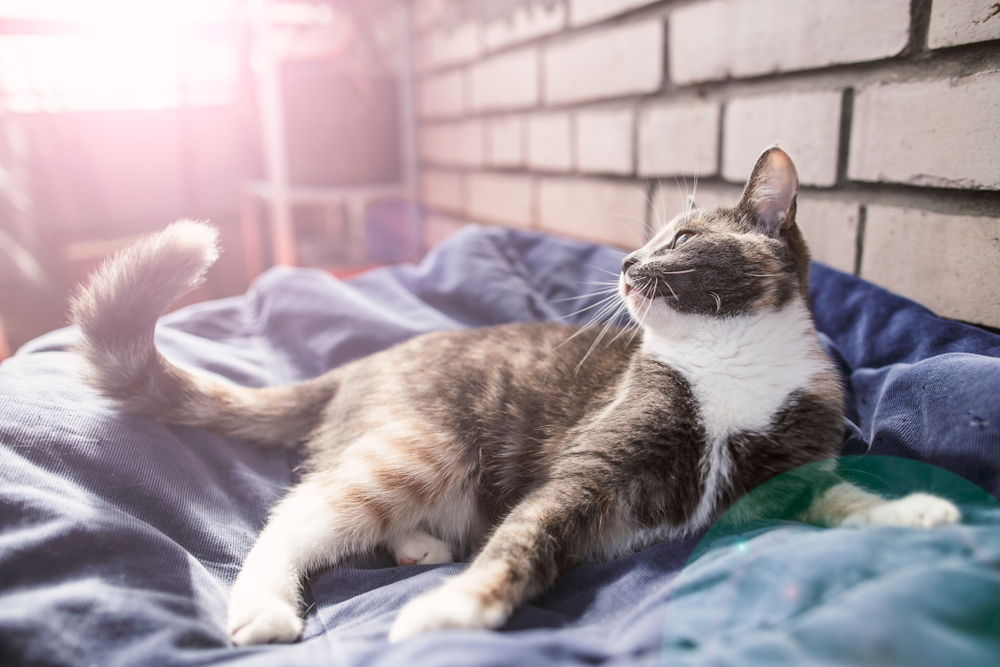
Sometimes your cat may wrap their tail around your arm, leg, or another cat. This is often a sweet sign.
A tail wrap can be similar to a gentle hug. Your cat may be showing affection, comfort, or social bonding. It is their way of staying connected without needing loud attention.
You may notice this when your cat walks beside you and lets their tail brush your leg. They may also curl their tail around you while sitting nearby.
This does not always mean your cat wants to be picked up or hugged. Cats have their own way of showing closeness. For some cats, simply touching you with their tail is enough.
If your cat wraps their tail around you, enjoy the moment. Speak softly, move gently, and let your cat choose how much attention they want.
Cats often show love in quiet ways. A tail wrap, slow blink, soft headbutt, or gentle rub can all be signs that your cat trusts you.
When your cat wraps their tail around you, they may be saying, “You are part of my safe world.”
A low tail can mean your cat feels unsure, nervous, or uncomfortable.
If your cat’s tail is held low to the ground, they may be cautious. If the tail is tucked close to the body or between the legs, the cat may be scared.
This can happen around loud noises, unfamiliar people, new pets, vet visits, moving homes, or stressful situations.
A low tail often comes with other body language signs. Your cat may crouch, hide, flatten their ears, avoid eye contact, or move slowly.
When you see this, try not to chase your cat or force them into interaction. Give them a quiet place to retreat. Cats feel safer when they have control over distance.
You can help by creating safe hiding spots, using calm voices, and letting your cat approach when they are ready.
If your cat often keeps their tail low and seems fearful, it may mean they need more confidence-building. Gentle play, predictable routines, and positive experiences can help.
Your cat’s low tail may be saying, “I’m not sure about this. Please give me time.”

Have you ever seen your cat walk toward you with their tail up and the tip quivering?
This can be a sign of excitement or happiness, especially when your cat greets you. Some cats do this when they are very pleased to see their owner or when they are expecting something they enjoy, like food or playtime.
A happy quivering tail usually comes with a relaxed body, soft eyes, and friendly behavior. Your cat may rub against your legs, meow softly, or walk close to you.
However, tail quivering can sometimes be connected to spraying behavior, especially if the cat backs up to a wall or vertical surface. In that case, the cat may be marking territory.
The difference is in the situation. If your cat is greeting you with a relaxed body, it is likely excitement. If your cat is backing up to furniture or walls, it may be marking behavior.
If spraying becomes common, it can be related to stress, territorial issues, or medical concerns. In that case, it is best to speak with a veterinarian.
But in many everyday moments, a small tail quiver during greeting is a happy little signal. Your cat may be saying, “I’m excited you’re here.”

Your cat’s tail is important, but it should not be read alone. To truly understand your cat, look at the whole body.
Pay attention to:
For example, an upright tail with relaxed ears and soft eyes usually means friendliness. But an upright, stiff tail with tense muscles may mean alertness or stress.
A moving tail during play may mean focus. But a hard-thumping tail during petting may mean irritation.
Context matters.
It is also important to remember that every cat has their own personality. Some cats are naturally expressive with their tails. Others are more subtle. The more you observe your cat, the better you will understand their personal language.
Learning your cat’s tail signals can help you avoid stress, respect boundaries, and recognize affection more clearly.
Most tail movements are normal communication. But sometimes, tail behavior can signal pain or injury.
You should pay attention if your cat suddenly holds their tail strangely, stops moving it normally, cries when the tail is touched, drags the tail, or seems unable to lift it.
Also watch for swelling, wounds, limping, hiding, loss of appetite, or sudden aggression when touched near the tail or back.
Cats may hide pain, so small changes can matter. If your cat’s tail looks injured or their behavior changes suddenly, contact a veterinarian.
Your cat’s tail is part of their spine and nervous system, so tail injuries should be taken seriously.
A healthy tail should move naturally and comfortably.
Your cat’s tail is one of the most powerful tools they use to communicate.
A tall tail may show confidence. A puffed tail may show fear. A slow-moving tail may show focus. A fast-thumping tail may mean irritation. A wrapped tail may show affection. A low tail may show nervousness. A quivering tail may show excitement.
Once you understand these signals, your cat becomes easier to understand.
The most important rule is to read the tail together with the whole body and the situation. Cats are subtle, and their communication is full of small details.
So, the next time your cat walks past you with their tail high, curls their tail around your leg, or starts thumping it during petting, pay attention.
Your cat is talking to you.
You just need to learn their language.