Physical Address
840 Oakwood Rd, Charleston, WV 25314
Physical Address
840 Oakwood Rd, Charleston, WV 25314

Cat Health & Behavior | Veterinary Awareness Guide | Approximately 1,500 Words


Cats are loving, intelligent, and sometimes mysterious companions. From playful jumping and curious exploration to peaceful sleeping and careful grooming, their daily behaviors reveal important information about their physical and emotional well-being.
However, some changes in behavior may be early warning signs of underlying health problems.
Unlike humans, cats cannot explain when they are experiencing pain, discomfort, or illness. Instead, they communicate through changes in movement, grooming, appetite, bathroom habits, and body language.
Cats also have a natural instinct to conceal weakness. This means an illness may develop before a pet owner notices obvious symptoms.
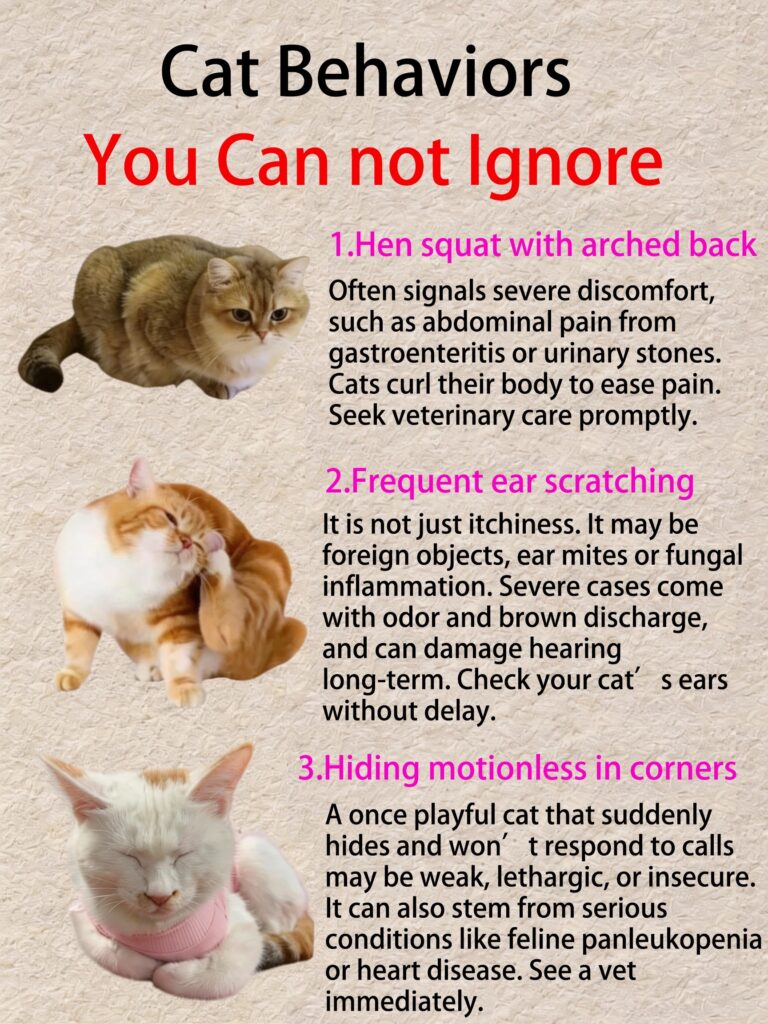
A cat that suddenly walks strangely, spends unusually long periods squatting in the litter box, or repeatedly licks the same part of its body may be showing signs of discomfort.
These behaviors do not always mean your cat has a serious medical condition. However, understanding when they are abnormal can help you recognize problems early.
In this guide, we explore three important behaviors that every cat owner should understand: abnormal walking gait, prolonged squatting in the litter box, and excessive licking or overgrooming.

Cats are naturally agile animals. Their flexible bodies, strong muscles, and excellent balance allow them to jump onto furniture, climb, run, and explore their surroundings.
Most healthy cats move with smooth, coordinated steps.
However, if your cat suddenly begins limping, staggering, dragging a leg, or walking with unusual movements, it may indicate a medical problem.
An abnormal walking gait refers to any noticeable change in how a cat moves.
Sometimes these changes are subtle. You may notice that your cat takes shorter steps, hesitates before jumping, or moves more slowly than usual.
Other times, the problem is more obvious, such as losing balance or struggling to stand.
1. Muscle or joint pain
Arthritis, muscle injuries, and other painful conditions can affect how cats walk. Older cats may develop joint problems that make jumping or climbing uncomfortable.
2. Paw or leg injuries
A damaged claw, sore paw pad, wound, or other injury may cause a cat to limp or avoid placing weight on one leg.
3. Neurological conditions
Certain conditions affecting the brain, spinal cord, or nerves can interfere with coordination.
A neurological problem involving impaired coordination is known as ataxia. Affected cats may stagger, sway, or appear unsteady while walking.
4. Inner ear or balance disorders
The inner ear contributes to balance. Problems involving the vestibular system may cause head tilting, stumbling, circling, or difficulty maintaining an upright position.
5. General weakness or illness
Some metabolic conditions, infections, or other illnesses can cause weakness and affect normal movement.
Veterinary guidance emphasizes that abnormal walking can have many causes, ranging from limb injuries to neurological and balance disorders.

Pay attention if your cat:
Suddenly limps or avoids putting weight on one leg.
Frequently stumbles, falls, or loses balance.
Drags its paws or walks with unusually stiff legs.
Hesitates to climb stairs or jump onto furniture.
Shows signs of pain when moving.
If you notice a new abnormal gait, contact your veterinarian promptly.
Keep your cat in a safe, quiet area and temporarily prevent access to high furniture or stairs to reduce the risk of falling.
Do not force your cat to walk or attempt to stretch painful limbs.
Recording a short video of the unusual walking pattern may help your veterinarian evaluate the problem.
Seek emergency veterinary attention if your cat suddenly cannot stand, loses the use of its legs, experiences severe pain, or develops serious balance problems.
Early veterinary assessment can help identify the underlying cause and determine appropriate treatment.

A cat’s litter box habits provide valuable information about its health.
Normally, cats enter their litter boxes, urinate or defecate, cover the waste, and leave.
However, if your cat remains in a squatting position for an unusually long time, repeatedly visits the litter box, or appears to struggle while eliminating, something may be wrong.
One of the most concerning possibilities is a urinary tract problem.
Some urinary conditions cause significant discomfort and can become life-threatening if treatment is delayed.
1. Feline lower urinary tract disease
Feline lower urinary tract disease, or FLUTD, describes several conditions affecting the bladder and urethra.
These conditions may cause painful urination, frequent litter box visits, or difficulty passing urine.
2. Bladder inflammation
Inflammation of the bladder can make cats feel as though they need to urinate frequently, even when little urine is present.
Stress can contribute to certain forms of feline bladder inflammation.
3. Urinary stones or obstruction
Mineral deposits or other material may interfere with urine flow.
A complete urinary obstruction prevents a cat from passing urine and is a medical emergency.
Male cats are particularly vulnerable because their urethra is relatively narrow.
4. Constipation
A cat experiencing constipation may remain in a squatting position while attempting to pass stool.
This can sometimes be mistaken for difficulty urinating.
5. Other digestive problems
Some gastrointestinal conditions may also cause repeated litter box visits, discomfort, or straining.
Cornell University College of Veterinary Medicine identifies frequent straining, painful urination, and producing little or no urine as important warning signs of feline urinary disease.

Observe whether your cat:
Makes repeated trips to the litter box.
Squats for a long time without producing urine.
Produces only a few drops of urine.
Cries or appears uncomfortable while squatting.
Frequently licks its genital area.
Shows blood in the urine or suddenly urinates outside the litter box.
If your cat is straining to urinate and passing little or no urine, seek emergency veterinary care immediately.
A urinary blockage can become life-threatening very quickly.
Do not assume the problem is constipation or wait until the next day to see whether it improves.
Do not press on your cat’s abdomen or attempt to treat a possible blockage at home.
If the cat is passing urine normally but repeatedly straining to defecate, contact your veterinarian promptly to assess possible constipation or another digestive problem.
Provide fresh drinking water, keep litter boxes clean, and place them in quiet, accessible locations.
A common recommendation for multi-cat households is to provide one litter box per cat, plus one additional box.
Stress reduction, environmental enrichment, and an appropriate diet may also support urinary health, although they do not eliminate every cause of urinary disease.
Healthy bathroom habits are an essential part of a cat’s overall well-being.

Cats are famously clean animals.
They spend a significant amount of time grooming their fur, removing loose hair, and keeping their coats in good condition.
Licking also helps distribute natural skin oils and maintain a comfortable coat.
Normal grooming is an important part of feline behavior.
However, excessive licking, sometimes called overgrooming, may indicate an underlying problem.
A cat that repeatedly licks one area, pulls out its fur, or develops bald patches may be experiencing discomfort, itching, pain, or stress.
1. Fleas and other parasites
Flea bites can cause intense itching, especially in cats with flea allergies.
Some affected cats repeatedly groom their lower backs, tails, or other irritated areas.
Even indoor cats can occasionally develop flea infestations.
2. Food or environmental allergies
Allergies may cause skin irritation, itching, and excessive grooming.
Potential triggers include certain food ingredients, environmental allergens, and flea saliva.
3. Skin infections
Bacterial and fungal skin infections can cause discomfort, redness, hair loss, and repeated licking.
4. Pain or physical discomfort
Cats may repeatedly lick an area of the body that hurts.
For example, discomfort around the abdomen, joints, or another body region may lead to focused grooming.
5. Stress and anxiety
Cats are sensitive to changes in their environment.
Moving homes, introducing another pet, or changing household routines may contribute to stress-related behaviors.
Some cats respond by grooming themselves more frequently.
However, stress should not be assumed to be the cause until physical conditions have been evaluated.
Cornell Feline Health Center explains that excessive grooming can be associated with parasites, allergies, pain, skin problems, and emotional stress.

Look for:
Repeated licking of the same body area.
Noticeable thinning or loss of fur.
Bald patches on the abdomen, legs, or tail.
Redness, irritated skin, or persistent scratching.
Grooming that interferes with eating, playing, or sleeping.
Normal grooming generally leaves a cat’s coat in good condition. Overgrooming may lead to visible hair loss or skin irritation.
Schedule a veterinary examination if your cat begins grooming excessively or develops bald patches.
Your veterinarian may examine the skin and coat, check for parasites, and investigate allergies or underlying pain.
Treatment depends on the specific cause.
For example, a flea-related problem requires appropriate parasite control, while a skin infection may require prescribed medication.
If medical causes are excluded, your veterinarian may recommend environmental changes to address stress-related grooming.
Provide a consistent daily routine, comfortable resting areas, scratching posts, and opportunities for interactive play.
Cats also benefit from having safe places where they can retreat when they feel overwhelmed.
Avoid punishing excessive grooming, as punishment may increase stress without addressing the underlying problem.
Healthy grooming is normal. Persistent licking that causes hair loss, irritation, or behavioral changes deserves veterinary attention.
| Behavior | Possible Causes | Recommended Action |
|---|---|---|
| Abnormal walking gait | Injuries, arthritis, balance or neurological disorders | Prompt veterinary assessment; emergency for sudden severe symptoms |
| Prolonged litter box squatting | Urinary disease, obstruction, constipation | Emergency if straining with little or no urine |
| Excessive licking | Parasites, allergies, pain, stress, skin infections | Veterinary examination if persistent or causing hair loss |
Cats have evolved with instincts that help them survive in the wild.
One of these instincts is the tendency to conceal signs of vulnerability.
As a result, some cats continue eating, walking, or interacting normally even while experiencing an underlying illness.
This is why observing small changes in everyday behavior is so important.
A cat that usually runs enthusiastically toward its food bowl may suddenly walk slowly. Another cat may visit the litter box more frequently than normal.
A third may begin licking its abdomen repeatedly.
Individually, these behaviors do not provide a diagnosis. However, changes from your cat’s usual routine can offer useful clues.
Owners who pay attention to their cats’ normal habits are often better positioned to recognize unusual behavior early.
Observe movement: Notice changes in walking, jumping, climbing, and general activity.
Check litter box output: Pay attention to urine clumps, stool consistency, and how often your cat uses the box.
Inspect the coat: Look for bald patches, redness, unusual shedding, or persistent licking.
Monitor appetite and hydration: Sudden changes in eating or drinking may indicate an underlying health concern.
Schedule regular veterinary care: Routine examinations can help identify conditions that may not yet cause obvious symptoms.
These habits are especially important for older cats and cats with existing health conditions.
Some behavioral changes require immediate attention rather than routine observation.
Seek emergency veterinary care if your cat experiences any of the following:
Repeated straining to urinate with little or no urine produced.
Sudden inability to stand or walk.
Severe weakness, collapse, or unresponsiveness.
Difficulty breathing.
Sudden severe pain or major neurological changes.
For less severe but persistent symptoms, such as mild limping or excessive grooming, arrange a veterinary appointment.
Never give your cat human painkillers or other medications unless a veterinarian specifically prescribes them.
Cats communicate through actions more than words.
An abnormal walking gait may indicate pain, injury, or a neurological condition. Prolonged squatting in the litter box may suggest urinary disease or constipation. Excessive licking may be associated with allergies, parasites, discomfort, or stress.
None of these behaviors automatically confirms a specific illness.
However, recognizing unusual changes and responding appropriately can help protect your cat from unnecessary suffering.
By observing your pet’s daily habits, providing a safe home environment, and seeking veterinary advice when needed, you can help support a longer, healthier, and happier life.
Your cat may not be able to tell you when something is wrong, but their behavior can speak volumes. Paying attention to the smallest changes can make a meaningful difference. ❤️🐱