Physical Address
840 Oakwood Rd, Charleston, WV 25314
Physical Address
840 Oakwood Rd, Charleston, WV 25314

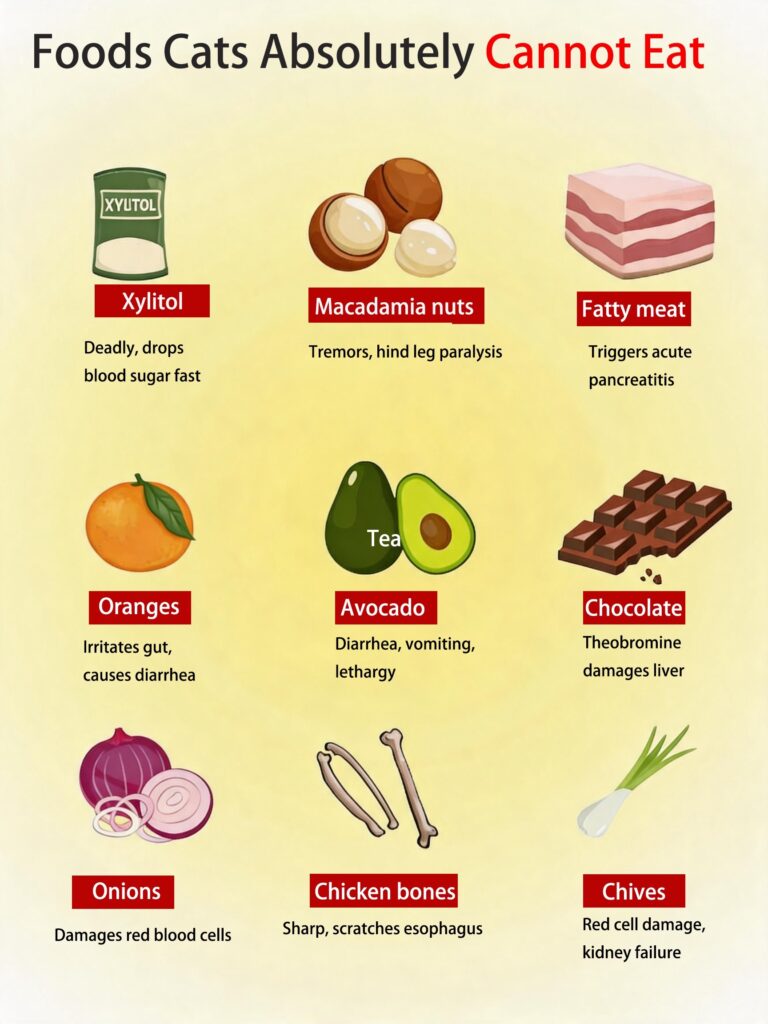
Every cat owner wants their beloved feline companion to live a long, healthy, and happy life. Providing nutritious meals, fresh drinking water, and a safe home environment is essential for maintaining a cat’s well-being.
However, one of the most important responsibilities of pet ownership is understanding which human foods may be dangerous for cats.
Cats are naturally curious creatures. They may investigate food left on kitchen tables, lick unattended drinks, or attempt to steal a bite from their owner’s plate. Unfortunately, some everyday foods contain substances that can cause serious health problems.
Unlike humans, cats are obligate carnivores. Their bodies require specific nutrients found primarily in animal-based foods, and they process certain ingredients differently.
In this guide, we explore nine foods and drinks that owners should avoid offering their cats: mushrooms, chili, squid, grapes, cola, lychee, milk, raw oysters, and tea.
Some are potentially toxic, while others present risks such as digestive irritation, choking, or bacterial infection. Understanding these differences can help protect your furry friend.
Mushrooms are commonly used in soups, salads, and other dishes. Although commercially cultivated edible mushrooms are generally not considered poisonous to cats, certain wild varieties contain dangerous toxins.
Poisonous mushrooms may affect the liver, kidneys, and nervous system. Depending on the mushroom species, symptoms can include vomiting, diarrhea, weakness, tremors, and difficulty walking.
Some mushroom toxins produce delayed symptoms, which makes accidental ingestion particularly concerning.
Wild mushrooms can be difficult to identify, and poisonous varieties may resemble harmless ones.
How to protect your cat: Never allow your cat to eat mushrooms growing in gardens, parks, or wooded areas.
Keep mushroom-based dishes containing onions, garlic, or heavy sauces away from pets.
If your cat consumes a wild or unidentified mushroom, contact a veterinarian immediately. Do not wait for symptoms to develop.
Chili peppers are popular ingredients in many cuisines, but spicy foods are not suitable for cats.
Chili contains capsaicin, the compound responsible for its burning sensation. This substance can irritate a cat’s mouth and gastrointestinal tract.
Cats that consume spicy food may experience excessive drooling, vomiting, diarrhea, or abdominal discomfort.
Many chili-based dishes also contain garlic, onions, salt, and oils, which introduce additional health concerns.
How to protect your cat: Avoid offering chili peppers, hot sauces, chili powder, or spicy leftovers.
If your cat accidentally tastes a small amount, prevent further exposure and provide fresh drinking water.
Contact a veterinarian if your cat develops persistent symptoms or eats food containing toxic ingredients such as onion or garlic.
Cats do not need spicy foods to enjoy a varied and healthy diet.
Squid is a seafood ingredient that contains animal protein and minerals. However, it is not an essential part of feline nutrition.
Squid itself is not considered inherently poisonous to cats, but its preparation can create several risks.
Raw squid may contain infectious microorganisms, while large pieces can be difficult for cats to chew and swallow.
Fried or seasoned squid often contains excessive salt, fat, or ingredients that are unsuitable for pets.
Dried seafood snacks may also contain high sodium levels.
How to protect your cat: Avoid raw, fried, salted, or heavily seasoned squid.
A tiny amount of thoroughly cooked, plain squid may be tolerated by some healthy cats when cut into manageable pieces.
However, squid should never replace complete and balanced cat food.
Owners of cats with seafood allergies or medical dietary restrictions should consult their veterinarian before introducing unfamiliar seafood.
Grapes are refreshing fruits enjoyed by humans, but they are not appropriate snacks for cats.
Grapes and raisins are known to cause potentially severe kidney injury in dogs.
The effects of grape ingestion in cats are less clearly established, and feline cases are not documented to the same extent.
Nevertheless, veterinary professionals often recommend avoiding grapes and raisins in cats because of the uncertainty and the serious risks observed in dogs.
Grapes also provide no essential nutrients that cats cannot obtain from properly formulated feline food.
Their rounded shape may create an additional choking concern.
How to protect your cat: Do not intentionally feed grapes, raisins, or desserts containing raisins.
Store fruit bowls where curious cats cannot access them.
If your cat swallows grapes or raisins, contact your veterinarian promptly for professional guidance.
Cola is a familiar soft drink, but it should never be offered to cats.
Many cola products contain caffeine, a stimulant that can affect the cardiovascular and nervous systems.
At sufficiently high doses, caffeine poisoning can cause restlessness, vomiting, rapid heartbeat, abnormal heart rhythms, tremors, and seizures.
Regular cola also contains sugar, which provides no necessary nutritional benefit to cats.
Sugar-free varieties are not appropriate alternatives, and carbonated acidic beverages may cause digestive discomfort.
How to protect your cat: Keep cola, caffeinated soft drinks, energy drinks, and concentrated caffeine products out of your cat’s reach.
A tiny accidental lick of cola is generally much less concerning than consuming a substantial amount, but the risk depends on the product and quantity.
If your cat drinks a significant amount or develops unusual symptoms, contact a veterinarian immediately.
Fresh, clean water is always the preferred everyday beverage for cats.
Lychee is a tropical fruit known for its fragrant aroma and juicy sweetness.
Although lychee is popular among humans, there is limited research concerning its suitability for cats.
Ripe lychee flesh is not established as a common feline toxin, but it offers little nutritional benefit to cats.
The fruit contains natural sugars, and its large, hard seed may cause choking or intestinal obstruction if swallowed.
Its rough outer peel can also be difficult to digest.
Sweetened canned lychees and lychee-flavored desserts may contain additional sugar and unsuitable ingredients.
How to protect your cat: Avoid offering whole lychees, seeds, peels, or unripe fruit.
Keep lychee desserts and sweetened fruit products away from pets.
If your cat swallows a lychee seed or develops symptoms after eating the fruit, seek veterinary advice.
Choosing established cat-safe treats is a better option than experimenting with unfamiliar tropical fruits.
Cats drinking milk is a familiar image in cartoons, movies, and advertisements.
However, ordinary cow’s milk is not necessarily a healthy choice for adult cats.
Many adult cats produce reduced amounts of lactase, the enzyme responsible for digesting lactose, the natural sugar found in milk.
When lactose is not properly digested, it can cause gas, bloating, abdominal discomfort, and diarrhea.
Not every cat is lactose intolerant, and milk is not inherently poisonous. Nevertheless, it offers unnecessary calories and may upset a cat’s stomach.
Milk should never replace water or nutritionally balanced meals.
How to protect your cat: Avoid serving ordinary cow’s milk as a regular drink.
Kittens that cannot nurse should receive a specially formulated kitten milk replacer.
For adult cats, provide fresh water and nutritionally complete food.
If your cat enjoys milk-like treats, ask your veterinarian about specially formulated lactose-reduced cat milk.
Oysters contain protein, zinc, vitamin B12, and other nutrients.
However, raw oysters should not be fed to cats.
Raw shellfish can carry harmful microorganisms, including certain Vibrio bacteria, which may cause foodborne illness.
Kittens, senior cats, and cats with weakened immune systems may be particularly vulnerable to infections.
The source, handling, and storage of oysters can also influence contamination risks.
Additionally, oysters served with sauces or seasonings may contain ingredients that are harmful to pets.
How to protect your cat: Never intentionally offer raw oysters or raw shellfish.
If your veterinarian approves a seafood treat, a tiny portion of thoroughly cooked, plain oyster meat is safer than raw oyster.
Remove the shell completely and avoid butter, garlic, salt, or seasoning.
Seek veterinary attention if your cat develops vomiting, diarrhea, weakness, or other symptoms after eating raw seafood.
Tea is one of the most popular drinks worldwide, but several common varieties contain caffeine.
Black tea, green tea, and other traditional teas may contain enough caffeine to present health concerns when consumed in significant quantities.
Cats are sensitive to caffeine, which can stimulate their cardiovascular and nervous systems.
Potential symptoms of caffeine poisoning include restlessness, vomiting, rapid heartbeat, muscle tremors, and seizures.
Tea bags and loose tea leaves can be particularly concerning because they contain more concentrated caffeine than a tiny sip of brewed tea.
Herbal teas are not automatically safe either. Some blends contain plants or other ingredients unsuitable for cats.
How to protect your cat: Avoid giving cats black tea, green tea, caffeinated milk tea, or concentrated tea products.
Store tea bags and loose leaves securely.
If your cat consumes tea leaves, a tea bag, or a substantial amount of caffeinated tea, contact a veterinarian promptly.
Clean water remains the safest drink for everyday hydration.
| Food | Main Concern | Recommendation |
|---|---|---|
| Mushrooms | Some wild species are poisonous | Avoid unidentified mushrooms |
| Chili | Mouth and digestive irritation | Avoid |
| Squid | Raw food contamination and choking | Avoid raw or seasoned squid |
| Grapes | Uncertain feline toxicity; severe dog toxicity | Avoid |
| Cola | Caffeine and unnecessary sugar | Never intentionally offer |
| Lychee | Choking, obstruction and limited safety data | Avoid |
| Milk | Lactose-related digestive upset | Avoid if intolerant |
| Raw oysters | Harmful bacteria | Never serve raw |
| Tea | Caffeine poisoning | Avoid caffeinated tea |
Accidental exposure can happen even in careful households. Knowing how to respond is essential.
Remove the food immediately. Prevent your cat from consuming additional amounts.
Identify the substance. Check ingredients, packaging, and the estimated quantity consumed.
Contact a veterinarian. Seek prompt advice for suspected toxic mushrooms, grapes, significant caffeine exposure, or symptoms of illness.
Observe your cat. Watch for unusual behavior, vomiting, diarrhea, weakness, tremors, or difficulty breathing.
Avoid home remedies. Do not induce vomiting or administer medication without veterinary instructions.
Some poisoning symptoms may take hours to appear, so prompt professional advice is important even when your cat seems normal.
Preventing exposure is one of the simplest ways to protect your cat.
Store potentially dangerous food and drinks in closed cupboards or containers. Remove unfinished meals from kitchen counters and dining tables.
Dispose of food waste safely and keep trash containers closed.
Make sure family members and visitors understand that not all human foods are appropriate for cats.
Offer complete and balanced cat food, provide clean drinking water, and use veterinarian-approved treats in moderation.
Regular veterinary examinations can also help identify underlying dietary concerns before they become serious health problems.
Mushrooms, chili, squid, grapes, cola, lychee, milk, raw oysters, and tea carry different risks for cats.
Some can cause poisoning, while others may lead to digestive irritation, choking, or infectious illness.
Understanding these differences helps cat owners make informed choices and avoid unnecessary dangers.
Cats do not need human snacks to live healthy and happy lives. Their nutritional needs are best met through complete, balanced feline diets, adequate hydration, physical activity, and regular veterinary care.
Protecting your cat starts with the everyday choices you make. A little knowledge today can help prevent a serious health problem tomorrow. ❤️🐱