Physical Address
840 Oakwood Rd, Charleston, WV 25314
Physical Address
840 Oakwood Rd, Charleston, WV 25314

Every cat owner wants their furry companion to live a long, healthy, and happy life. Providing nutritious meals, clean drinking water, regular veterinary care, and a loving environment is essential for keeping cats healthy.
However, protecting cats also means understanding which human foods should never be offered to them.
Many foods that humans enjoy can harm cats. Some contain toxic substances that affect blood cells, the heart, or the nervous system. Others present risks because of high fat content, difficult-to-digest ingredients, or the possibility of choking and internal injury.
Cats are obligate carnivores, meaning their bodies are designed to obtain essential nutrients primarily from animal-based foods. Their digestive systems and nutritional requirements differ significantly from ours.
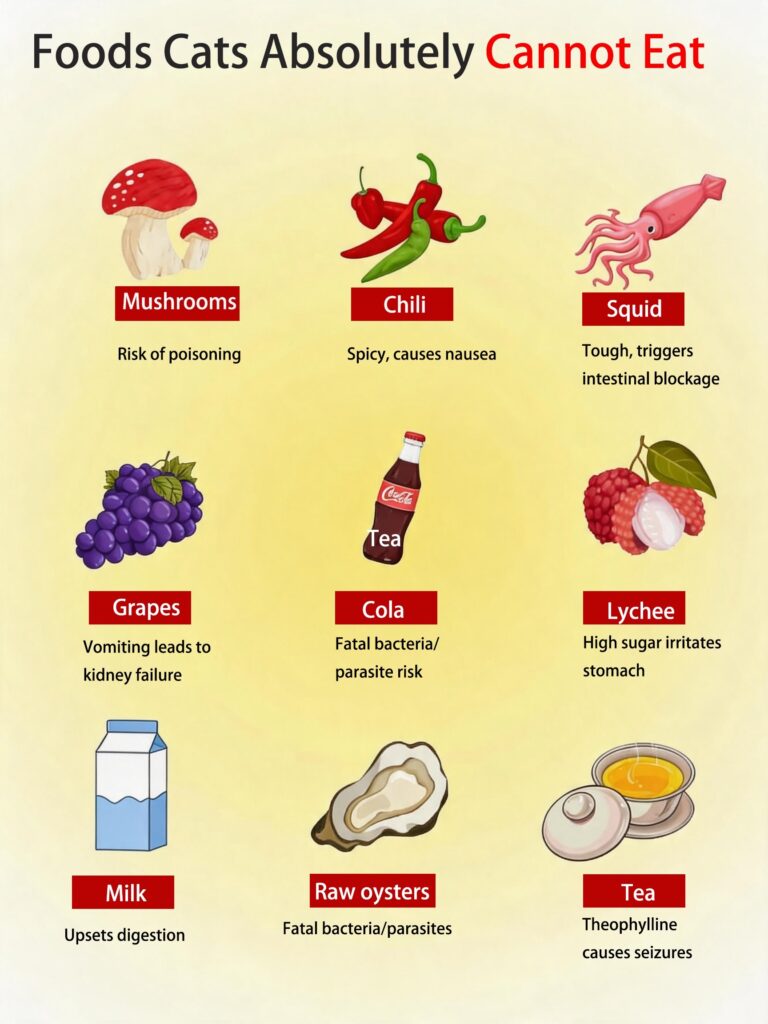
In this guide, we will explore nine foods and ingredients that cat owners should avoid: xylitol, macadamia nuts, fatty meat, oranges, avocado, chocolate, onions, chicken bones, and chives.
Important: These foods do not all carry the same level of danger. Chocolate, onions, and chives are established feline toxins, while several others are best avoided because of digestive, physical, or uncertain risks.
Understanding these differences can help you make safer decisions for your cat.
Xylitol, also called birch sugar, is a sweetener commonly found in sugar-free chewing gum, candies, certain baked goods, dental products, and some medications.
It is especially dangerous to dogs because it can trigger a sudden drop in blood sugar and potentially cause serious liver injury.
However, there is an important distinction for cat owners: research and veterinary poison-control experience have not established the same severe xylitol toxicity in cats. The ASPCA reports that xylitol does not cause the serious problems in cats that it can cause in dogs.
Nevertheless, xylitol-containing products are not suitable cat treats. They may contain other problematic ingredients, and candies or chewing gum can create additional risks.
Safety advice: Keep sugar-free products and human dental products in secure storage. Use only toothpaste formulated for cats.
If your cat swallows a product containing xylitol, contact a veterinarian and provide the product’s ingredient information.
Macadamia nuts are popular snacks, particularly in cookies, chocolates, and baked goods.
They are known to cause poisoning in dogs, potentially producing weakness, vomiting, tremors, and difficulty coordinating movements.
The same poisoning syndrome has not been clearly established in cats. However, this does not mean macadamia nuts are a good food choice for feline companions.
Nuts contain substantial amounts of fat, which can upset a cat’s digestive system. Whole nuts may also present choking concerns, especially for smaller cats.
Macadamia-containing desserts can be even more problematic because they may contain chocolate, sweeteners, or other unsuitable ingredients.
Safety advice: Never intentionally feed macadamia nuts to your cat. Keep bowls of nuts, cookies, and nut-based desserts outside your pet’s reach.
If your cat eats a macadamia-containing product, contact your veterinarian, particularly if it contains chocolate or other potentially toxic ingredients.
Cats require animal fats as part of a balanced diet. However, feeding excessive amounts of fatty meat or rich table scraps can cause health problems.
Foods such as bacon, fatty steak trimmings, sausage, and poultry skin often contain high concentrations of fat. Processed meats may also contain large amounts of sodium and seasonings.
Eating unusually rich foods can result in vomiting, diarrhea, and digestive discomfort.
In some pets, fatty meals are associated with pancreatitis, an inflammatory condition affecting the pancreas. Cats with pancreatitis may show reduced appetite, lethargy, vomiting, or other nonspecific symptoms.
Regularly feeding excessive calories can also contribute to obesity, which increases the risk of several feline health conditions.
Safety advice: Avoid fatty table scraps and processed meats. If offering meat as an occasional treat, choose a small, thoroughly cooked, unseasoned, boneless lean portion.
For everyday meals, use complete and balanced cat food that provides appropriate amounts of protein and fat.
Oranges are refreshing fruits rich in vitamin C, but they are unnecessary in a cat’s diet.
Cats naturally produce vitamin C in their bodies and do not require oranges as a dietary source.
Citrus fruits contain citric acid and essential oils, especially in their peels, leaves, and other plant parts. These substances can irritate a cat’s digestive system.
Eating citrus plant material or concentrated citrus oils may cause vomiting, diarrhea, or other health concerns. Larger exposures can be more serious.
A small accidental taste of orange flesh is generally less concerning than eating the peel or concentrated oil, but it still offers no meaningful nutritional advantage.
Safety advice: Avoid feeding oranges, orange peels, citrus essential oils, or orange-flavored products to your cat.
If your cat consumes citrus oil or a substantial amount of peel, contact a veterinarian promptly.
Avocados are popular because they contain healthy fats, fiber, and a variety of vitamins.
However, foods considered healthy for humans are not necessarily suitable for cats.
Avocado contains a natural compound called persin, found in varying amounts throughout the plant. Persin is especially concerning for certain animals, including birds and some livestock.
Cats are not known to experience the same severe sensitivity. Nevertheless, avocado is best avoided because of its fat content and other potential hazards.
Large amounts of avocado flesh may cause digestive upset. The large pit creates a choking or intestinal obstruction risk, while guacamole frequently contains onions or garlic, which are toxic to cats.
Safety advice: Do not offer avocado pits, peels, leaves, or guacamole to your cat.
If your cat accidentally licks a tiny amount of plain avocado flesh, severe poisoning is not generally expected, but monitor for symptoms and consult a veterinarian if you are concerned.
Chocolate is one of the most important human foods to keep away from cats.
It contains theobromine and caffeine, two substances belonging to a group of compounds called methylxanthines. Cats cannot safely tolerate significant amounts of these chemicals.
Chocolate poisoning can affect the digestive system, heart, and nervous system.
Potential symptoms include vomiting, diarrhea, restlessness, rapid heart rate, muscle tremors, and seizures.
The amount and type of chocolate matter. Dark chocolate, baking chocolate, and cocoa powder generally contain higher concentrations of theobromine than milk chocolate.
Even though white chocolate contains very little theobromine, it is still unsuitable as a cat treat because of its fat and sugar content.
Safety advice: Keep chocolate bars, cakes, brownies, cocoa powder, and chocolate desserts safely stored.
If your cat eats chocolate, contact a veterinarian immediately. Do not wait for symptoms to appear.
Onions are especially dangerous to cats because they contain compounds that can damage red blood cells.
This damage may lead to hemolytic anemia, a condition in which red blood cells are destroyed faster than the body can replace them.
Onion poisoning can cause weakness, reduced appetite, vomiting, pale gums, and difficulty breathing.
Symptoms may not appear immediately, making accidental exposure particularly concerning.
All forms of onion can be harmful, including raw, cooked, dried, powdered, and dehydrated onions.
Onion powder is especially easy to overlook because it is frequently used in soups, sauces, snacks, and prepared meals.
Safety advice: Never feed your cat onions or foods containing onion ingredients.
Always check ingredient lists before offering any human food. If your cat consumes onions, contact a veterinarian promptly, even if your pet appears normal.
Chicken can be a nutritious ingredient in complete cat food, but chicken bones create unnecessary risks.
Cooked chicken bones can become brittle and may break into sharp fragments. These pieces can cause choking or injuries to the mouth and digestive tract.
Bones may also become lodged in the esophagus, stomach, or intestines, potentially causing a serious obstruction.
Raw bones are not automatically safe either. They can still cause physical injuries and may expose cats to harmful bacteria.
Some owners believe chewing bones is essential for dental health, but safer veterinary-approved dental products are available.
Safety advice: Always remove bones before offering plain, cooked chicken.
Dispose of leftover chicken bones securely and keep trash containers closed.
If your cat swallows a chicken bone, seek veterinary advice promptly. Do not try to force food down to move the bone or make your cat vomit.
Chives may look like harmless green herbs, but they belong to the Allium family, along with onions, garlic, and leeks.
These plants contain compounds capable of damaging a cat’s red blood cells, potentially resulting in anemia.
Cats are particularly sensitive to Allium-related toxicity.
Chive exposure may cause gastrointestinal discomfort, weakness, decreased appetite, or other symptoms related to red blood cell damage.
Both fresh and dried chives are unsafe to intentionally feed to cats.
Chives are often included in salad dressings, dips, cream cheese mixtures, soups, and prepared dishes, making accidental exposure possible.
Safety advice: Keep chive plants and foods containing chives away from your cat.
Never assume that a small quantity of an herb is safe simply because it is natural.
If your cat eats chives, contact a veterinarian without delay.
| Food | Main concern | Recommendation |
|---|---|---|
| Xylitol | Major dog toxin; feline risk differs | Avoid |
| Macadamia nuts | High fat, choking; dog-specific toxicity | Avoid |
| Fatty meat | Digestive upset, excess calories | Avoid fatty scraps |
| Oranges | Citrus oils and digestive irritation | Avoid |
| Avocado | Pit obstruction, fat, other ingredients | Avoid |
| Chocolate | Theobromine and caffeine poisoning | Never feed |
| Onions | Red blood cell damage | Never feed |
| Chicken bones | Choking, injury, obstruction | Never feed |
| Chives | Red blood cell damage | Never feed |
Accidents can happen, even in the most careful households.
If your cat eats something potentially toxic or swallows a dangerous object, acting promptly is essential.
Remove access to the food or substance.
Contact your veterinarian or emergency veterinary hospital immediately.
Identify the food, ingredients, and approximate amount consumed.
Save the food packaging if available.
Never attempt to induce vomiting or give home remedies unless a veterinarian specifically instructs you to do so.
Seek emergency veterinary attention if your cat develops weakness, breathing difficulties, tremors, repeated vomiting, or unusual behavior.
Some toxic effects can be delayed, so waiting for symptoms is not always safe.
Creating a cat-friendly home starts with everyday habits.
Store unsafe foods in closed containers or cabinets. Keep kitchen countertops clean and promptly dispose of bones, food wrappers, and leftovers.
Ask family members and visitors not to share table scraps without checking whether the food is appropriate for cats.
Most importantly, provide a complete and balanced cat diet, clean drinking water, and treats specifically formulated for feline nutrition.
These simple precautions can significantly reduce unnecessary exposure to dangerous household foods.
Cats depend on their owners to make safe nutritional choices.
While some human foods can be enjoyed as occasional treats, others can cause serious illness, digestive problems, or physical injuries.
Chocolate, onions, and chives are particularly concerning because of their established toxicity to cats. Bones, excessive fatty meat, and several other foods present different risks and should also be avoided.
By understanding these dangers, checking ingredients carefully, and keeping unsafe foods out of reach, you can help protect your feline companion.
A longer, healthier life begins with good nutrition, safe feeding habits, regular veterinary care, and the love you give your cat every day. ❤️🐱